Water supports these systems by aiding circulation and waste removal, but drinking large amounts at a specific time does not enhance detoxification beyond normal physiological function. Relying on morning water consumption as a “detox” strategy is therefore misleading; overall hydration and a balanced lifestyle are what truly support the body’s natural processes.
Practical Hydration Tips
1. Start your day hydrated (but don’t overthink it)
A glass of water in the morning is fine—it helps replace overnight fluid loss—but it’s not a magic health boost.
WaterSupply & Treatment
2. Focus on total daily intake
Most adults need roughly 2–3 liters per day (varies by size, climate, activity).
A simple guide: pale yellow urine = well hydrated
3. Drink consistently, not all at once
Spacing water intake throughout the day is more effective than drinking a large amount at one time.
4. Adjust for activity and environment
Exercise, heat, or illness → increase fluids
You may also need electrolytes if sweating heavily
5. Don’t rely on thirst alone
Thirst can lag behind actual dehydration, especially in older adults.
6. Include water-rich foods
Fruits and vegetables like cucumbers, oranges, and watermelon contribute to hydration.
Fruits& Vegetables
7. Be cautious with “detox” claims
Your body already detoxifies efficiently—focus on:
Balanced diet
Regular exercise
Adequate sleep
8. Avoid overhydration
Drinking excessive water can dilute sodium levels (rare but serious). Balance is key.
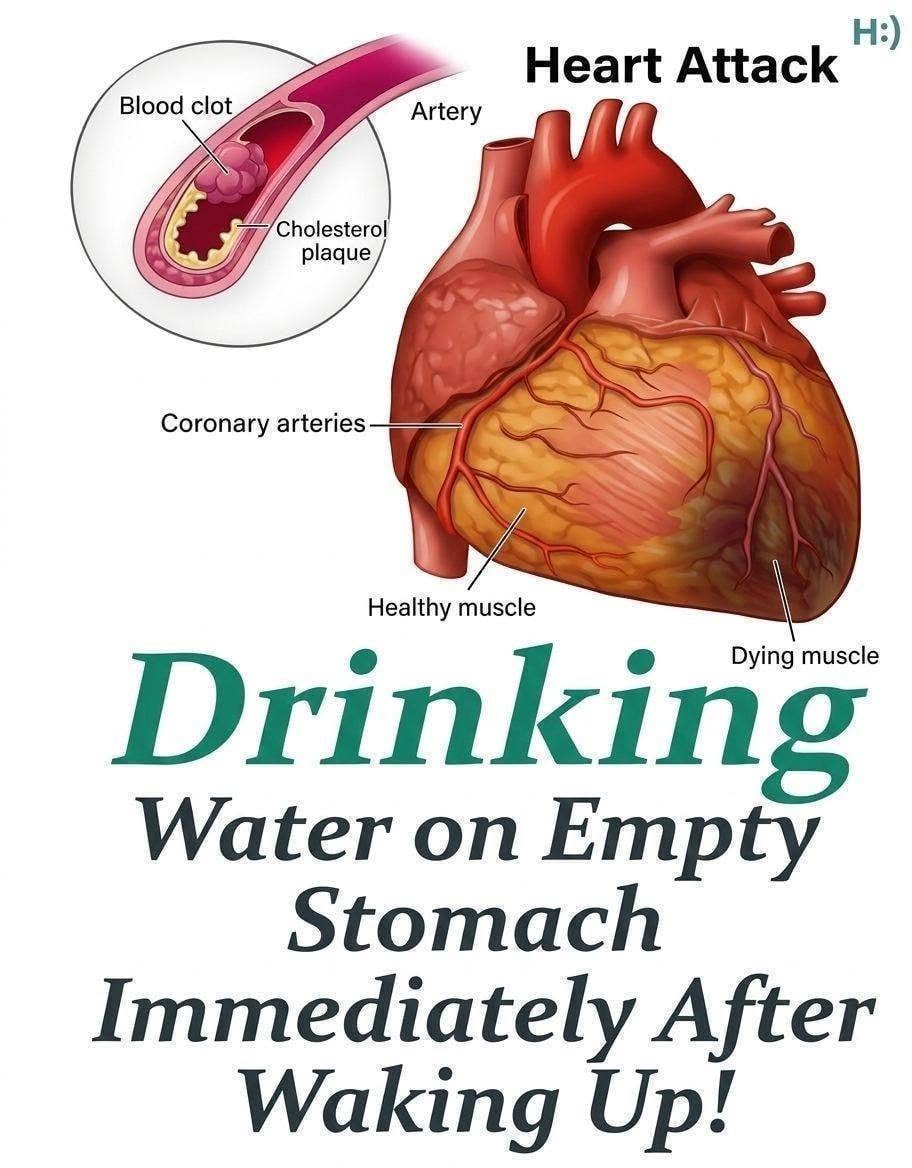
About the heart attack claim in the image
There’s no solid scientific evidence that drinking water on an empty stomach directly prevents heart attacks. Heart health is influenced by factors like:
WaterSupply & Treatment
Blood pressure
Cholesterol levels
Diet and exercise
Smoking and genetics
Hydration supports overall health, but it’s not a standalone prevention method for heart disease.
read more in next page